
Building Trust Across Languages in Immigration Practice
Immigration law is inherently global. Attorneys work with clients who speak a wide range of languages and come from diverse cultural backgrounds. Clear, multilingual client communication is not only a matter of professionalism but also a matter of legal accuracy and ethical responsibility.
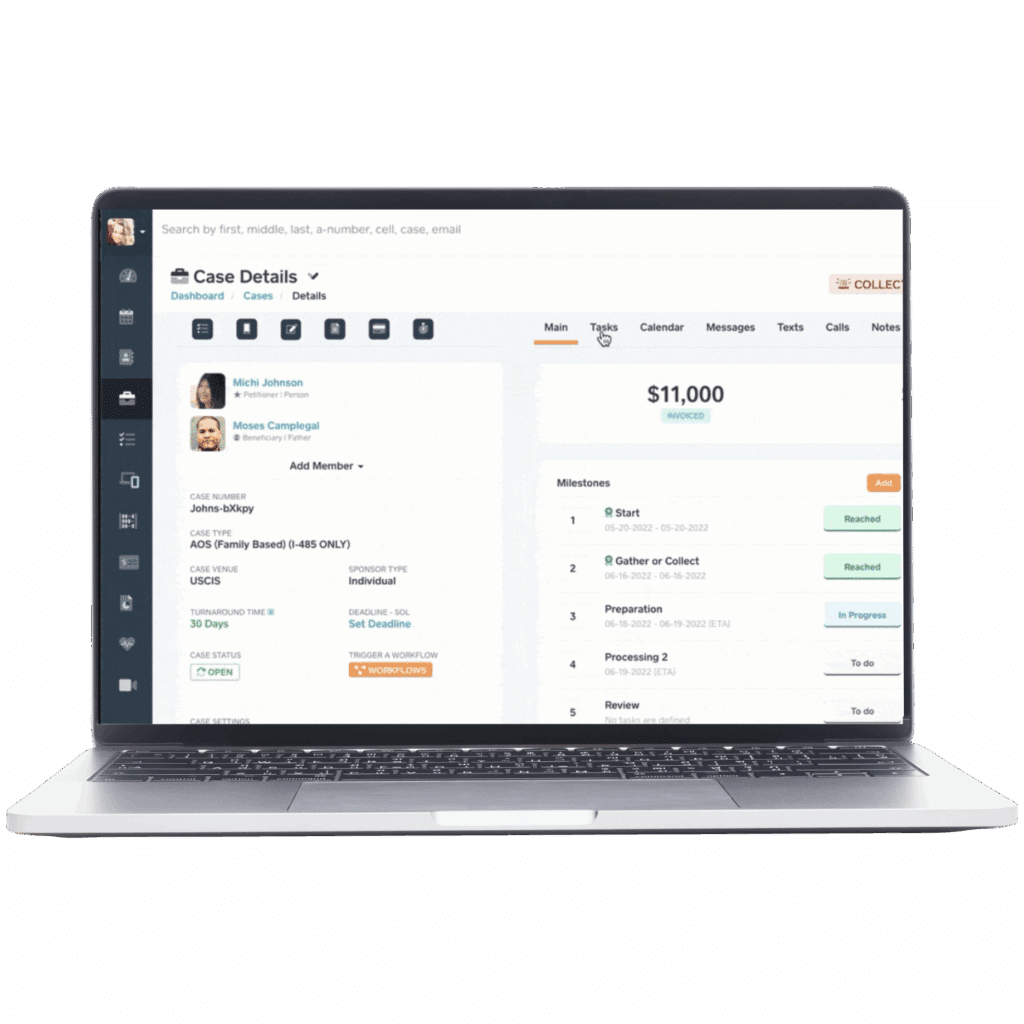
Inconsistent translation or unclear explanations can cause serious errors in forms, affidavits, and testimony. For firms that aim to serve clients effectively, developing a multilingual communication strategy is essential. CampLegal makes it easy to serve clients from around the world with built-in multilingual features, a secure client app available in 17 languages, and customizable document templates that support translation in multiple languages.
Why Multilingual Client Communication Matters in Immigration Law
Accurate communication forms the foundation of every immigration case. A single misunderstanding about a form instruction, eligibility requirement, or deadline can alter the outcome of an application.
Immigration attorneys face several translation challenges:
-
- Clients may rely on informal interpreters such as family members, increasing the risk of miscommunication
- Legal terminology may not have a direct equivalent in another language, requiring careful contextual explanation
- Government forms and evidence often need certified translation to meet USCIS or consular standards
Translation is a compliance safeguard, making it a necessary consideration. Firms that invest in multilingual systems protect both their clients and their professional reputation, and set themselves up for industry growth.
When to Translate: Identifying Key Touchpoints
Luckily, not every document or message requires full translation, but certain moments in the client relationship demand linguistic precision.
1. Initial Intake and Engagement: During consultations or intake, translation ensures that clients fully understand the scope of services, fee agreements, and confidentiality terms. This step establishes trust from the beginning.
2. Evidence Collection: Documents such as birth certificates, marriage records, and affidavits must be translated accurately and certified when submitted to USCIS or the Department of State.
3. Legal Forms and Client Questionnaires: Clients often complete complex forms or questionnaires. Providing these materials in their preferred language prevents incomplete or incorrect responses that can delay the case.
4. Case Updates and Instructions: Translating key updates or procedural instructions reduces confusion and ensures that clients act promptly on requests for evidence or biometrics appointments
5. Final Review Before Submission: Before any filing, attorneys should confirm that clients understand the full content of the submission, including potential legal consequences and next steps.
How to Translate Immigration Documents Effectively
- Use Certified Translators for Legal Documents: Official documents submitted to USCIS, or consulates must include certified translations. This certification states that the translation is complete and accurate to the best of the translator’s ability. CampLegal allows firms to attach certification statements directly within each case file for easy compliance tracking.
- Leverage Technology Responsibly: Machine translation tools can assist with informal communication, but they are not a substitute for professional translation in legal contexts. Firms should use them only for general explanations or non-binding messages.
- Maintain Consistency Across Cases: Terminology should remain consistent across all translated materials. CampLegal helps standardize this through reusable multilingual templates for recurring communications, ensuring consistent tone and accuracy.
- Keep Client Privacy Secure: Translation often involves sensitive personal data. CampLegal’s encrypted client portal ensures that communication and document sharing occur in a secure environment, protecting client confidentiality during every stage of translation.
- Include Cultural Context: Effective translation considers tone and cultural nuance. Attorneys should be aware of how legal terms and instructions may be perceived in different cultures and adjust explanations accordingly.
How CampLegal Supports Multilingual Communication
CampLegal was designed for immigration firms where clients and cases span the world. The platform makes it possible for clients to view case updates, messages, custom intake forms, invoices, and upload documents in 17 different languages. Attorneys can send translated instructions through the system, ensuring clarity and minimizing confusion.
CampLegal also integrates language tagging, allowing firms to organize clients by language preference and assign interpreters or bilingual staff to specific cases. Combined with its secure messaging and automated reminders, CampLegal delivers seamless multilingual workflows that reduce administrative effort, improve client satisfaction, and reduce miscommunications.
When immigration law firms master multilingual communication, it produces noticeable benefits, including reduced errors in communications, higher client retention, improved compliance, and greater operational efficiency.
If you’re ready to transform your firm, CampLegal’s built-in translation tools are just part of the package. Try it risk free for 14 days, today!