
Understanding the RFE: What It Means for Your Case
A Request for Evidence (RFE) is one of the most common procedural hurdles in U.S. immigration practice. It signals that U.S. Citizenship and Immigration Services (USCIS) requires additional information before deciding on a pending application or petition. While receiving an RFE can cause anxiety for clients, it is not necessarily a sign of denial; it is a request for clarification or missing documentation. According to the latest USCIS data on RFE rates, RFE issuance has increased across several form types in 2025, particularly for employment-based petitions (Forms I-129 and I-140) and adjustment of status applications (Form I-485).
Most Common RFE Reasons in 2025
1. Insufficient Evidence of Employer–Employee Relationship (H-1B, L-1, O-1)
USCIS frequently questions whether an employer has sufficient control over the beneficiary’s work, especially in third-party placement scenarios.
- Typical trigger: Contracts or letters fail to specify job duties, supervision, or project duration.
- Resolution: Provide detailed employer–employee agreements, organizational charts, and project descriptions. USCIS’s H-1B Policy Guidance clarifies acceptable evidence for verifying the right to control work.
2. Specialty Occupation or Qualification Doubts (H-1B)
RFEs often arise when USCIS believes the job is too generic or not clearly tied to a specific degree field.
- Typical trigger: Job titles like “Analyst” or “Consultant” without clear correlation to a degree requirement.
- Resolution: Include expert opinion letters, detailed job descriptions, and evidence that the role typically requires a degree in a specific specialty. Cite the Occupational Outlook Handbook (OOH) to show industry standards.
3. Missing or Inconsistent Supporting Documents (I-485, I-130, I-765)
RFEs frequently result from omitted forms, outdated translations, or incomplete financial documentation.
- Typical trigger: Missing birth certificates, marriage evidence, or tax transcripts.
- Resolution: Submit certified copies, accurate English translations, and IRS tax transcripts rather than self-prepared statements.
4. Proof of Maintenance of Status (F-1, OPT, or H-1B extensions)
Students and temporary workers often receive RFEs if there are gaps or inconsistencies in visa status history.
- Typical trigger: Gaps between employment authorization periods or failure to maintain full-time student status.
- Resolution: Provide I-94 records, SEVIS printouts, and employment letters demonstrating continuous lawful presence.
5. Public Charge and Financial Support Issues (I-485 and I-864)
Since updated public charge guidelines went into effect, USCIS has issued more RFEs regarding financial sufficiency and sponsor income.
- Typical trigger: Missing pay stubs, incomplete Affidavit of Support (Form I-864), or inconsistent household size data.
- Resolution: Provide complete tax returns, proof of current income, and evidence of assets that meet 125% of the Federal Poverty Guidelines.
6. Evidence of Bona Fide Relationship (I-130, K-1)
Family-based applications can trigger RFEs if USCIS doubts the authenticity of a marriage or engagement.
- Typical trigger: Sparse documentation of joint assets or short relationship timelines.
- Resolution: Submit joint lease agreements, shared bank accounts, photographs, and affidavits from family and friends attesting to the relationship’s legitimacy.
How to Respond to an RFE Effectively
- Read the RFE Carefully: Identify the exact evidence that USCIS requests. Each bullet point should correspond to a section in your response
- Respond Completely and on Time: USCIS sets a strict deadline (usually 87 days). Late or partial responses can result in automatic denials
- Organize the Response Logically: Include a table of contents, labeled exhibits, and a short cover letter summarizing your arguments
- Use Consistent Terminology: Ensure job titles, wages, and dates match across all forms and documents to prevent new questions
- Explain Context When Needed: If a document cannot be produced, submit a written explanation with secondary evidence (e.g., affidavits or alternative records)
Preventing Future RFEs
Immigration firms can reduce RFE rates by building standardized review systems into their workflows. For example:
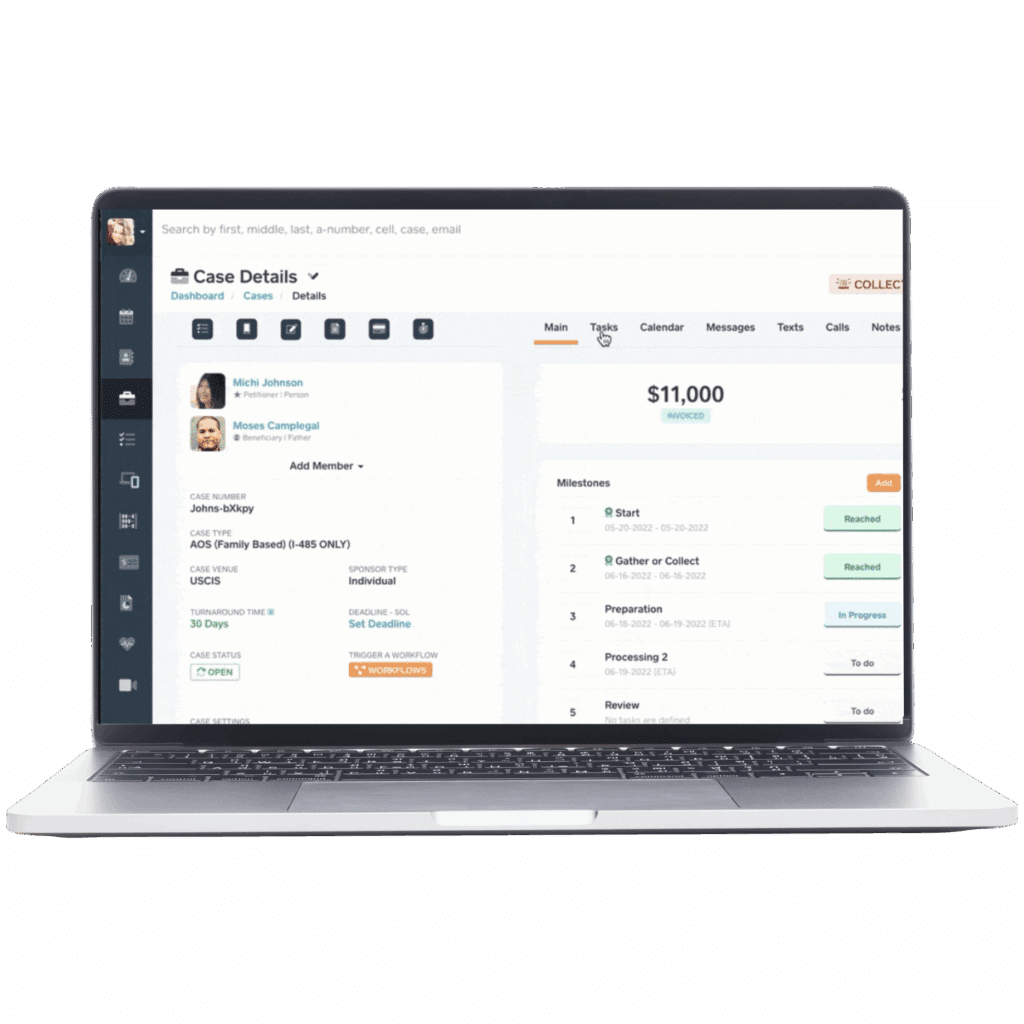
- Integrate automated document checklists into immigration case management software
- Conduct pre-submission audits for consistency and missing evidence
- Maintain digital templates for frequently filed petitions that include the latest adjudication trends and policy changes
RFEs are not necessarily a setback; they are an opportunity to clarify and strengthen a case. The key is preparation: detailed documentation, consistent recordkeeping, and timely communication between attorneys and clients. Preparation is the best prevention; firms that adopt proactive quality-control measures and data-driven workflows will not only reduce RFEs but also improve overall adjudication outcomes, client satisfaction, and firm efficiency.