
A Significant Fee for Parole Grants
In immigration industry news, DHS began collecting a $1,000 fee for many foreign nationals granted parole under H.R. 1 One Big Beautiful Bill Act (OBBBA). The immigration parole fee attaches when an individual is formally paroled into the United States under section 212(d)(5)(A) of the Immigration and Nationality Act (INA). For law firms, employers, and immigration practitioners, this change demands prompt revision of client intake, cost planning, and eligibility review.
Why the Fee for Parole Grants Was Introduced
The fee is a result of legislative changes under HR 1, which directed the DHS to implement several new immigration-related fees. Parole is a discretionary form of entry or stay where the foreign national does not otherwise have the standard visa or admissibility documentation, but the government allows entry for urgent humanitarian reasons or significant public benefit.
DHS issued a notice in the Federal Register that the parole fee must be paid by any alien who is granted parole, including initial parole, re-parole, or parole from DHS custody, unless an exception applies.
What the New Fee for Parole Grants Means in Practice
- ·The $1,000 parole fee must be paid after the parole is approved but before the entry or effectuation of parole is complete
- The fee is subject to annual adjustments for inflation
- The fee does not apply to all parole applicants. There are ten statutory exceptions, including: individuals entering under advance parole with a pending adjustment of status application (Form I-485)
- It does not apply simply at the time of application filing or I-131 travel document filing; it applies at the time of the actual parole grant and entry
What to Do Next
- Audit all pending parole cases to identify which may trigger the new fee and determine who bears the cost (applicant, employer, or sponsor)
- Evaluate exemption eligibility: confirm whether the client qualifies for one of the ten enumerated exceptions, such as advance parole with a pending I-485
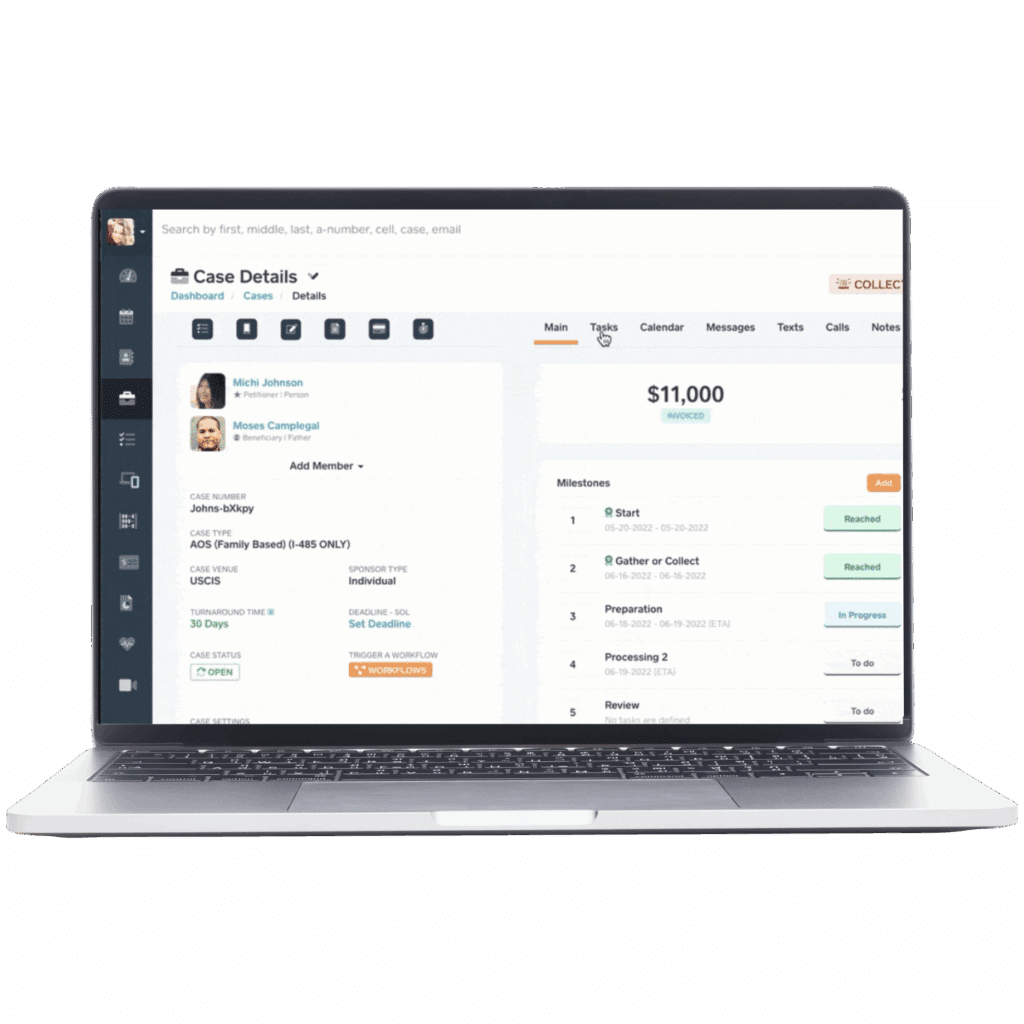
- Update internal workflows: ensure case management systems flag the fee trigger point and prompt payment instructions once parole is approved
- Communicate proactively with clients: inform them of the fee, timing of payment, and potential impact on entry or stay
- Budget and advise accordingly: for corporate clients, integrate the fee into total cost calculations for international mobility or relocation programs
CampLegal makes it easy to monitor and track different aspects of cases and clients to ensure that changes like the new immigration parole fee do not go unnoticed.