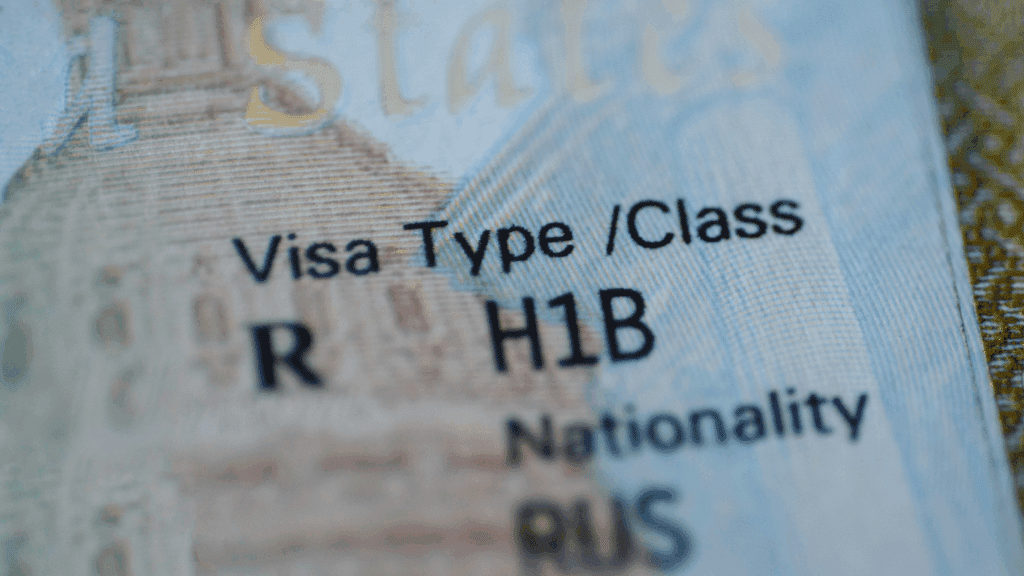

The H-1B Program Under Review
The H-1B visa program, which allows U.S. employers to hire foreign workers in specialty occupations, is undergoing major reform in 2025. A presidential proclamation signed on September 19, 2025, introduced sweeping adjustments, most notably a $100,000 one-time filing fee for new H-1B petitions filed on or after September 21, 2025. For law firms and HR teams, these changes reshape how they assess eligibility, manage compliance risk, and budget for sponsorship. The H-1B category remains one of the most essential yet heavily scrutinized employment-based immigration programs in the United States.
Background: How the H-1B Program Works
The H-1B visa applies to workers in occupations requiring specialized knowledge and at least a bachelor’s degree (or equivalent) in a directly related field. Employers must file Form I-129 with a certified Labor Condition Application (LCA) from the Department of Labor before USCIS will adjudicate the petition. Each fiscal year, the program operates under a statutory cap of 65,000 regular petitions and 20,000 for U.S. advanced-degree holders, selected through a lottery when demand exceeds supply. According to USCIS H-1B Employer Data Hub, the agency received more than 470,000 registrations for the FY 2025 cycle, underscoring the high demand and competitive nature of this visa category.
The 2025 Policy Changes: What Has Been Updated
1. Stricter Specialty-Occupation Definitions
A final DHS rule effective January 17, 2025, narrowed the definition of “specialty occupation,” requiring a direct relationship between the beneficiary’s degree and the offered position. Legal analysts at Holland & Knight note that USCIS now reviews interdisciplinary degrees (e.g., business administration or data analytics) with greater scrutiny, especially in IT or hybrid management roles.
2. New $100,000 Fee and Entry Restrictions
The September 2025 presidential proclamation introduced a $100,000 fee for many new H-1B petitions filed after September 21, 2025. The White House described this as a “labor market protection measure,” though immigration advocates warn it effectively prices out smaller employers. The American Immigration Council questions the decision, stating that “A large, very profitable employer may be able to absorb a $100,000 fee with little impact to its bottom line. But what about start-ups, small businesses, or employers in sectors such as hospitals or public-school systems? If a start-up has identified a noncitizen with the latest knowledge of AI, will that start-up be delayed or precluded from pursuing new product development because it cannot afford the $100,000 fee? Will a public school have to increase class size rather than expand the number of classes in a grade because it cannot afford a $100,000 fee for an H-1B worker?
3. Lottery and Registration Reform
A separate modernization proposal by DHS, announced in late September 2025, seeks to shift the H-1B lottery to a wage-based selection system, giving priority to higher-wage offers and limiting duplicate entries for the same beneficiary. The Society for Human Resource Management (SHRM) details the new system, “A worker offered a Level 4 wage (the highest level) would be entered into the selection pool four times; a Level 3 beneficiary, three times; a Level 2 beneficiary, two times; and a Level 1 beneficiary, once — significantly increasing the selection probability for higher wage levels.”
These combined reforms signal a broader push toward transparency and fraud prevention but add complexity to employer filings.
The Effects on Employers and Attorneys
- Operational Impact: Employers must now prove a clear link between the degree and job duties when drafting offer letters and LCAs
- Legal Risk: USCIS adjudicators are issuing more Requests for Evidence (RFEs) for roles in business or mixed technical fields
- Financial Burden: The new $100,000 filing fee sharply increases the cost of sponsorship, CBS News reports that smaller tech startups have already paused new filings
- Administrative Pressure: The modernized registration process and heightened fraud checks may extend pre-registration verification timelines, requiring firms to start preparation earlier than usual
Preparing for the New H-1B Era
The 2025 H-1B reforms represent more than a procedural update; they mark a structural shift in how the United States defines “specialty occupation.” Attorneys and HR teams should:
- Reassess job-description templates to ensure they align degree requirements with actual duties
- Update internal budgets and client advisories to account for the new fee structure and possible lottery reform
- Educate clients on alternative visa pathways such as O-1, TN, or E-2 categories when H-1B costs or eligibility issues arise