
When One Process Tries to Serve Two Very Different Types of Work
Many immigration firms handle both family-based and business-based matters. At a high level, the work may look similar, intake, documents, review, and filing. Because of that surface similarity, firms often try to manage both practice areas using the same immigration workflows.
This is where problems begin.
Family immigration and business immigration operate on fundamentally different rhythms. When they are forced into a single process, neither runs as smoothly as it should.
Why These Case Types Behave Differently
Family based cases tend to be emotionally driven and client led. Timelines are often flexible. Information arrives unevenly. Communication needs are high because clients are personally invested and often unfamiliar with legal processes.
Business immigration follows a different pattern. Timelines are structured around employment start dates, compliance requirements, and employer coordination. Documents are standardized but require precision. Delays carry operational consequences for companies, not just individuals.
Trying to manage both with one intake flow and one case pipeline creates friction. The workflow inevitably fits one practice area better than the other.
The Cost of a Single Workflow
When firms use a shared process, tradeoffs appear quickly:
- Family cases feel rushed or overly rigid
- Business cases feel slow or under controlled
- Staff switches context constantly
- Priorities become unclear
Over time, teams compensate informally. They bypass steps, create side lists, and track work outside the system. These workarounds are a signal that the workflow does not match the work.
Separate Pipelines Create Clarity
High performing firms accept that different practice lines require different playbooks.
Family based intake focuses on client guidance, document education, and flexible pacing. Business immigration intake emphasizes employer data, role definitions, and compliance checkpoints.
By separating pipelines at intake, firms align expectations from the beginning. Cases move through stages that actually reflect how the work unfolds.
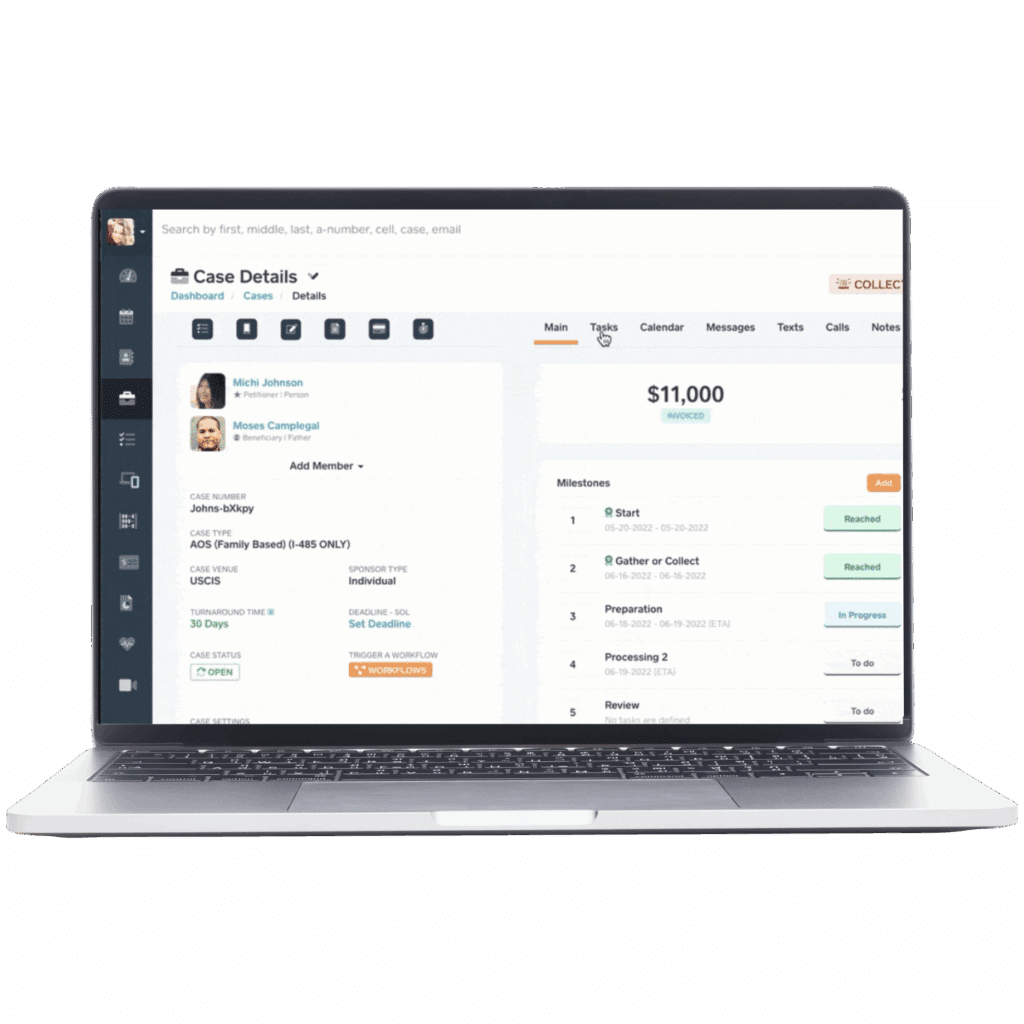
CampLegal allows firms to configure separate pipelines for family and business matters, so each practice line operates according to its own logic.
Document Requests and Timelines Are Not Interchangeable
The difference continues with document collection.
Family based cases often involve personal records gathered over time. Business cases rely on employer documents that are standardized but time sensitive. Treating these the same leads to frustration on both sides.
Distinct document request kits and timelines reduce confusion. Clients know what is expected, employers understand deadlines, and staff no longer adapts on the fly.
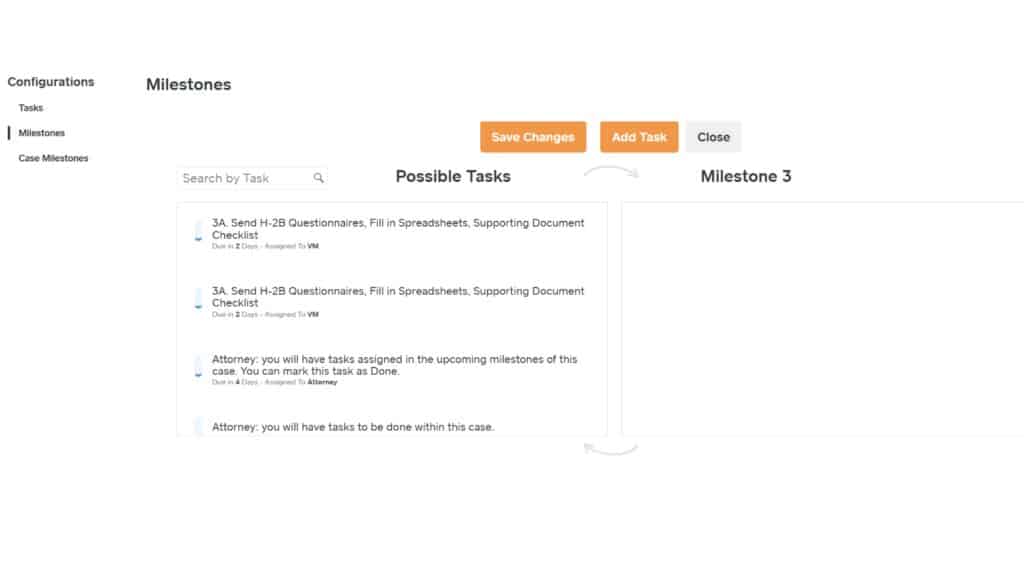
CampLegal supports case type specific document kits that reflect the realities of each practice area.
Specialization Reduces Bottlenecks
Another common issue is role confusion.
The skills required to manage family-based matters are not the same as those needed for business immigration. When everyone works from one queue, specialization erodes and bottlenecks increase.
Separating queues by practice line allows staff to develop expertise and move cases faster. Attorneys review files that are prepared in the style they expect. Paralegals work within familiar patterns.
CampLegal enables role-based queues, so work is routed to the right team without constant manual triage.
Why Two Playbooks Improve the Whole Firm
Splitting workflows does not create silos. It creates alignment.
Teams know what success looks like for each case type. Metrics become more meaningful. Training improves because expectations are clear.
Most importantly, clients and employers experience a process that feels designed for their needs rather than adapted from something else.
Final Takeaway
Family immigration and business immigration share a legal foundation, but they demand different operational approaches.
Forcing one workflow onto both creates friction, delays, and workarounds. Separate pipelines, tailored document kits, and role specialization allow each practice line to operate efficiently without compromise.
CampLegal is built to support this dual playbook approach. Not by fragmenting operations, but by letting firms design workflows that match how each type of immigration work actually gets done.
Reach out to CampLegal today for a conversation about building workflows that actually fit your practice.